Foi enviada uma ligação para definir a sua palavra-passe para: Irá necessitar de uma palavra-passe para aceder às suas compras futuramente.

The physicist


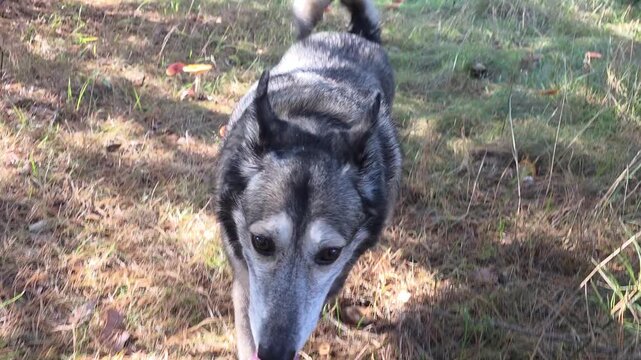
The dog independently found a place for itself to protect itself from the sun's rays. 
Intelligence or instinct. What's more important in this case?
00:09
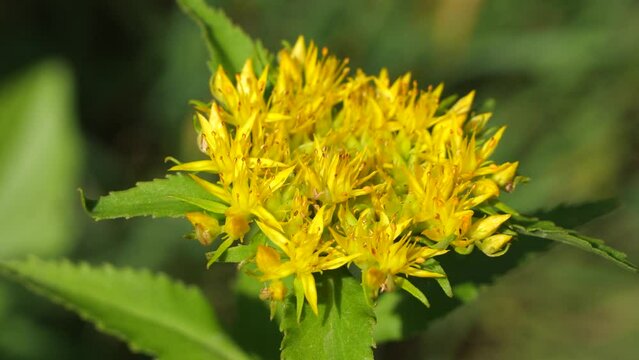
Summer flowers at the edge of the forest.
This combination of herbs occurs in the middle of summer.
00:19
Summer flowers at the edge of the forest.
This combination of herbs occurs in the middle of summer.
00:13
Bee swarm on a tree branch. 
Formation of a new bee colony.
00:17
Bees collect nectar and pollen from phacelia flowers.
00:30
Bees collect nectar and pollen from phacelia flowers.
00:26
Bees collect nectar and pollen from phacelia flowers.
00:30
Bees collect nectar and pollen from phacelia flowers.
00:25
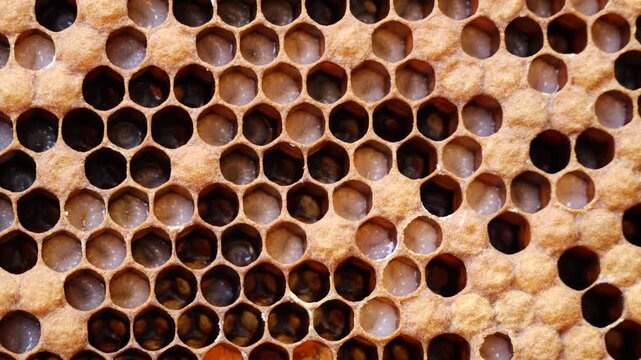
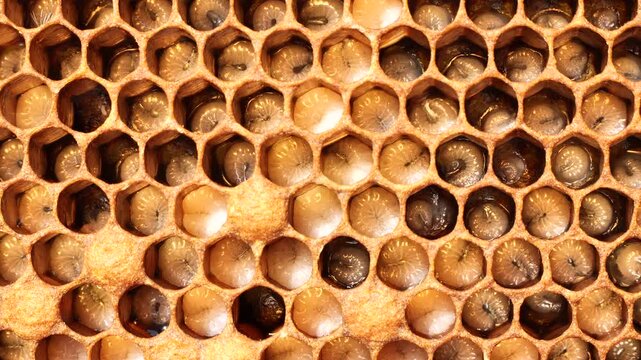
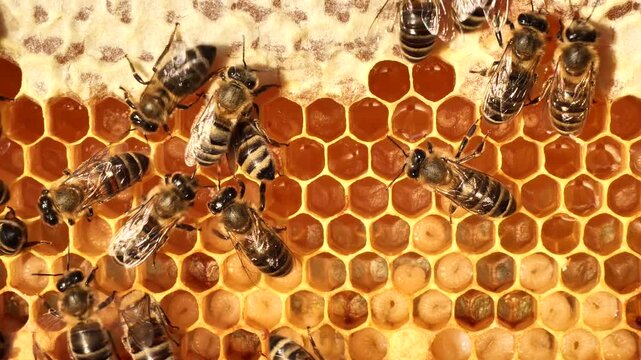
The honeycombs contain the larvae of developing honey bees. 
To further develop the larvae into insects, the honeycombs will be covered with wax caps.
00:19
The honeycombs contain the larvae of developing honey bees. 
To further develop the larvae into insects, the honeycombs will be covered with wax caps.
00:15
The honeycombs contain the larvae of developing honey bees. 
To further develop the larvae into insects, the honeycombs will be covered with wax caps.
00:14
The honeycombs contain the larvae of developing honey bees. 
To further develop the larvae into insects, the honeycombs will be covered with wax caps.
00:16
A large number of eggs and larvae of future bees in the honeycombs.
This indicates the excellent development of the bee colony.
00:30
A large number of eggs and larvae of future bees in the honeycombs.
This indicates the excellent development of the bee colony.
00:15
Bees collect nectar and pollen from flowers of sunflower. Sunflowers give a lot of nectar and pollen than attract insects.
00:31
Bees collect nectar and pollen from flowers of sunflower. Sunflowers give a lot of nectar and pollen than attract insects.
00:30
Pollen of phacelia flowers. 
Pollen from the flowers of the tanacetifolia plant.
00:22
Pollen of phacelia flowers. 
Pollen from the flowers of the tanacetifolia plant.
00:21
Pollen of phacelia flowers. 
Pollen from the flowers of the tanacetifolia plant.
00:14
Bees in evening rays of sun.
Video for relaxation. Warm tones and slow strokes of the wings of insects act soothingly.
00:24
Bees in evening rays of sun.
Video for relaxation. Warm tones and slow strokes of the wings of insects act soothingly.
00:28
Bees on a frame removed from the hive.
The bees are gathered at the top of the frame, expressing anxiety.
00:16
Bees on a frame removed from the hive.
The bees are gathered at the top of the frame, expressing anxiety.
00:11
Ground reed grass, Calamagrostis epigejos.
A perennial grassy plant. The swaying of its panicles is beautifu
00:20
Ground reed grass, Calamagrostis epigejos.
A perennial grassy plant. The swaying of its panicles is beautifu
00:27
Ground reed grass, Calamagrostis epigejos.
A perennial grassy plant. The swaying of its panicles is beautifu
00:21
Girl, hail, rain, and thunderstorm.
A girl was caught in rain, hail, and thunderstorm.
00:30
The honeycomb contains flower honey.
Flower honey is usually called honey obtained from the nectar of wild and meadow flowers.
00:25
The honeycomb contains flower honey.
Flower honey is usually called honey obtained from the nectar of wild and meadow flowers.
00:25
Flowering of yellow bedstraw
These are meadow and wild flowers. Medicinal plants. Can be used in landscape design.
00:30
Flowering of medicinal valerian.  Valerian extract and dried roots are used in folk medicine. It is a sleep aid and sedative
00:21
Lysimachia vulgaris, a loosestrife plant, blooms.
In folk medicine, it is used for various bleeding disorders and as a wound-healing remedy. It grows in meadows and near marshes.
00:14
Flowering of yellow bedstraw
These are meadow and wild flowers. Medicinal plants. Can be used in landscape design.
00:11
Bees on honeycombs in the evening. 
In the evening bees are calm. Video for relaxation.
00:17
The honeycombs contain the larvae of developing honey bees. 
To further develop the larvae into insects, the honeycombs will be covered with wax caps.
00:21
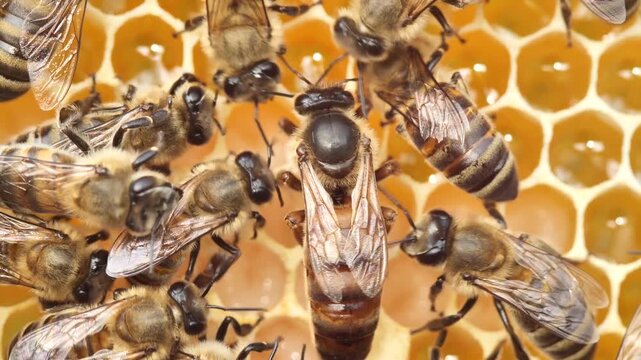
The Queen Bee lays her eggs in the honeycomb.
00:21
Reproduction of bees. From the egg to the larva. 
Feeding the larvae with bee milk. 
The eggs laid by the queen bee in the honeycomb, the bees are poured with milk.
00:16
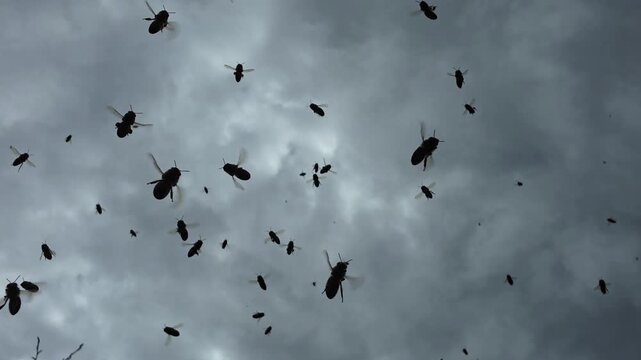
Bees are actively flying over the hive. 
Such an active movement of bees indicates the beginning of swarming.
00:27
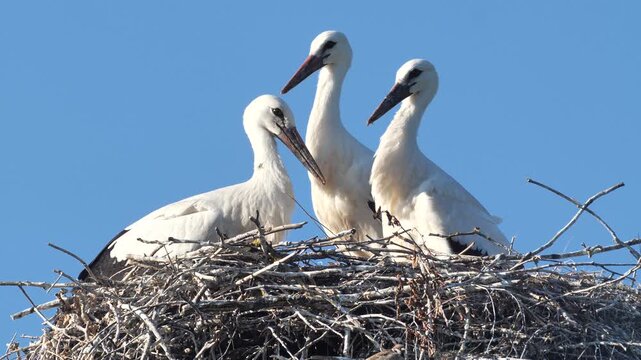
Stork chicks are waiting for adult birds to return to the nest.
In search of food, adult birds fly to swamps and meadows.
00:30
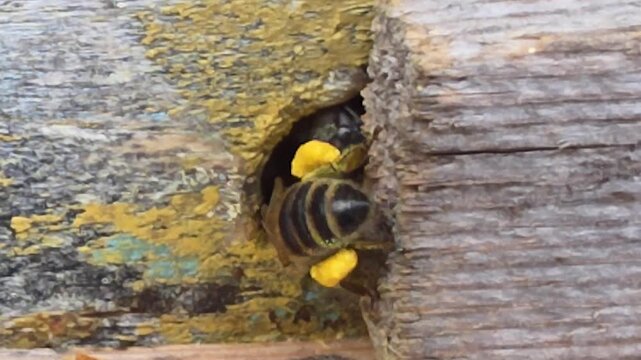
A bee with collected pollen at the entrance to the hive.
A guard bee works in the narrow entrance to the hive.
00:10